
“The EPC wants basic data we do not have yet.”
The requirements specification has gaps, and the interfaces to the Balance of Plant are open.
- Gaps in the specification
- Change orders from the plant builder
- First plant delayed
- Investor milestone missed
Validate technology · Scale production
Your pilot is running. Your investor asks about the first industrial plant, or the new hall has to produce. What is missing is the engineer who sees process, plant and manufacturing at the same time. I am Tobias Breitbach, and I close exactly that gap.
 Dr.-Ing. Tobias BreitbachEngineer for the road from pilot to industrial plant
Smaller first packages often start the next day
The problem
The expensive mistakes do not happen in research. They happen at the transitions, where decisions suddenly cost a lot of money and are hard to reverse.
The requirements specification has gaps, and the interfaces to the Balance of Plant are open.
The design is not ready for series, and assembly and testing do not scale with it.
The building grid is fixed before the process layout is. The production planner does it “on the side”.
+33 %cost and +30 % time on large projects with weak front-end planning.Source: IPA/Merrow 2012, industrial megaprojects > USD 1 bn
73 %of variant manufacturers miss their delivery-reliability target, by 21 percentage points on average.Source: Fraunhofer IPA, n = 500
≈ 99,470open engineering positions in Germany. Senior capacity is missing exactly when time is short.Source: VDI/IW Ingenieurmonitor Q3/2025
The real problem
Between lab, plant and production lie interfaces that nobody feels responsible for. That is exactly where the expensive mistakes happen.
01 · Your team
Cell chemistry, software, customers: there is no time left for the specification, balance of plant and production. These tasks get done "on the side".
02 · The plant builder
Every gap in the basic data later becomes a change order. If you do not staff your side of the table, you pay twice.
03 · The interfaces
Everyone optimises their own part. Whether the whole works only shows at commissioning, when changes are most expensive.
3–5 %of the investment is what thorough front-end planning costs, a fraction of what change orders and delays cost later.Source: IPA/Merrow 2012, rule of thumb for large projects
The answer is not a large consulting team. It is one experienced engineer on your side who checks the critical 10 %: the interfaces between process, plant and production.
Where the risk arises
Much works up to the lab. The decisive risks arise at the transitions to the prototype and test rig, to the pilot plant and into series production.
 IdeaTest assumptions on product properties and production cost early.
 LabSecure the main function before the prototype is built and expensive steps follow.
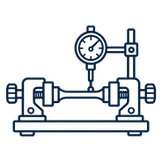 Prototype / test rigMake sure the prototype works and the relevant risks measurably fall.Critical transition
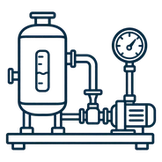 Pilot plantBring edge cases and possible disturbances to light in trial operation.Critical transition
 Series productionSecure quality and target cost at high volumes as well.Critical transition
I start where technical decisions become expensive and hard to reverse.
Calculator
With your own figures, in 20 seconds. Nothing is stored or sent.
How we work together
At every step you know what you do, what you get and how long it takes.
You choose how active to be: information by email, a call back or a short call.
You describe your situation, your goal and your time pressure. I ask the questions your bottleneck raises.
Confidentiality first: we sign an NDA. Then we look at data, plans and, where needed, the plant or hall together.
We agree the goal, scope, milestones and contact persons. We start with a clearly defined package at a fixed price agreed in advance.
Depending on the project, I support you for six months, nine months or long term: remotely over the project term, on site when it counts.
Example
A scale-up is about to award the contract to the plant builder. Time is short, and the team is busy with cell chemistry. Instead of a large mandate, we start with a design review at a fixed price agreed in advance.
Call-back requested. A 15-minute call the same day.
First meeting: NDA signed, documents received.
Diagnosis: basic data, interfaces and balance of plant reviewed, site visit.
Joint approach: prioritised points before the award, fixed-price package starts.
Support through to the award and through the planning of the first plant.
Your path
From pilot to first industrial plant, from stack to series, from test rig to due diligence.
To the scale-up topics Industry & productionNew halls, material flow, automation without a catalogue machine, and senior capacity for planning offices.
To the production topicsFour focus areas
Technical depth, production know-how and clear decisions from one source.
 01
Check feasibility, challenge assumptions and make technical risks visible early.
Due diligence & feasibility (DE) 02
Develop test strategies, define test set-ups and prove them under real conditions.
Test bench & pilot plant (DE)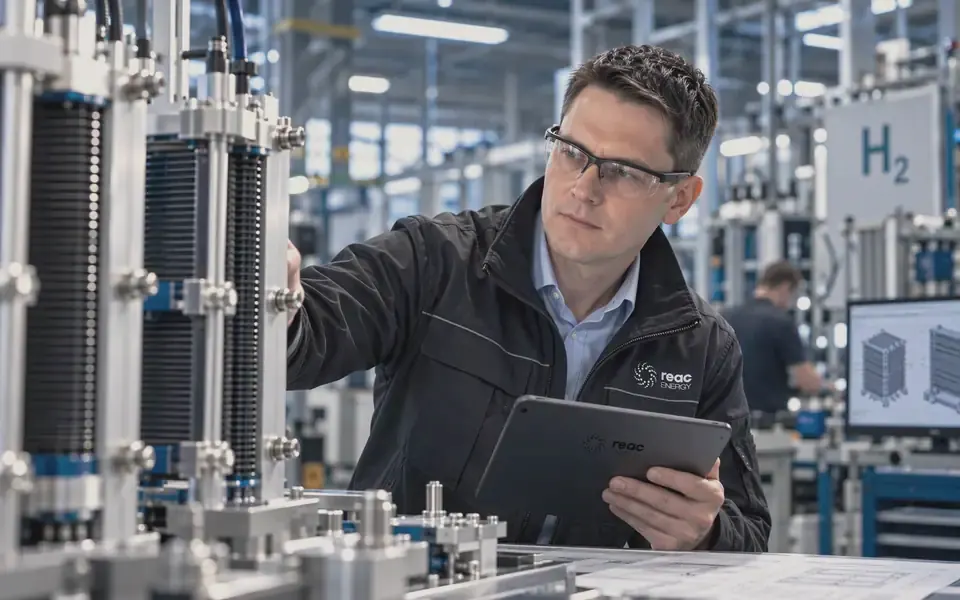 03
Support design for manufacturing, production systems, ramp-up and transfer into series.
Road to series production (DE)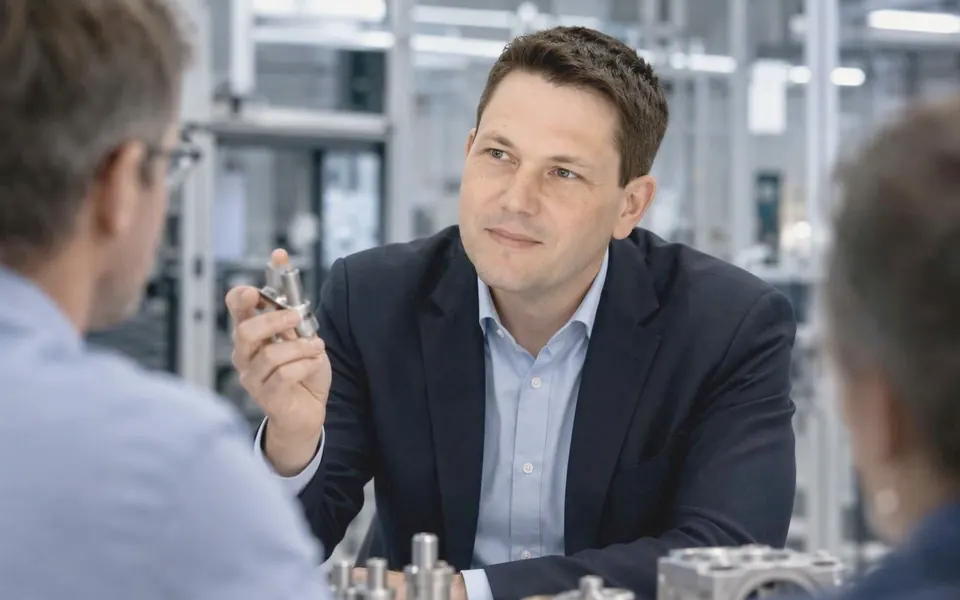 04
Due diligence, site development, project control and structured delivery as an adviser.
Approach & first packages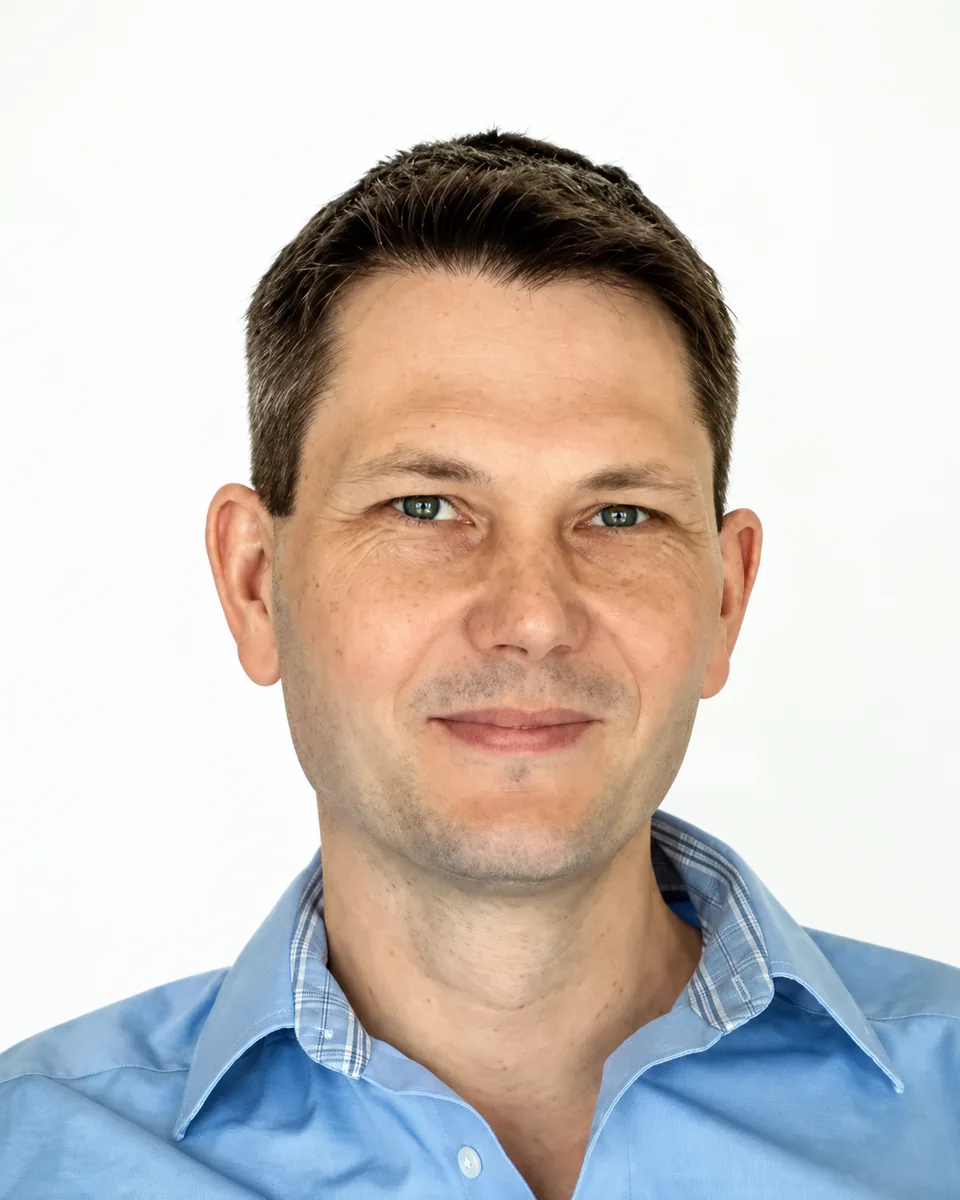 Dr.-Ing. · Mechanical engineering
About me
I keep questioning until it is clear what does not work, or it is out.
REAC Energy is my engineering office. You work directly with me, and with my team where a project needs more hands. I typically run three projects in parallel: few on purpose, so each gets my full attention.
Explosion-protection assessments (ATEX) belong to specialist experts. I bring them in instead of pretending it is mine. And I do not replace an EPC or a large detail-engineering team.
What I do: review the critical interfaces between process, plant and manufacturing so that your EPC and your experts can work cleanly.
References
From a design review before EPC award at a climate-tech scale-up with its own electrolysis process to multi-year support of a plant expansion for a German technology group in the USA. Anonymised until the client agrees to be named.
My projects are planned so that short-notice assignments remain possible.
Every first package is clearly defined and has a fixed price agreed in advance. You know the cost before you start. There is no open-ended hours budget.
We sign an NDA before any data is exchanged. Your intellectual property stays with you – we set this out in the NDA and the contract.
With me you do not get a profile to vet. You get a defined package with a clearly defined deliverable and a fixed price agreed in advance. Clearly separated work packages also make the contract cleaner.
Yes. For example on a plant expansion in the USA: remotely over the whole term, and on site for the decisive commissioning steps and acceptance tests at the manufacturer.
Language
REAC Energy is a Germany-focused consultancy, so the detailed topic pages are written in German. The pages marked (DE) open in German. For anything else, write to me in English.
Let us get started
For a smaller, clearly defined first package I can often start the next day: read in, think through, prepare the site visit. From the start you talk to the engineer who also does the work.